Hear the why.
Collect spoken feedback, or pair a rating or choice with an audio explanation.
Explore audio questionsResearch surveys
Explore customer needs, test assumptions, and understand the reasons behind a choice. Create research surveys with a defined audience and a decision in mind.
Start free Audio & video questions Customize without code
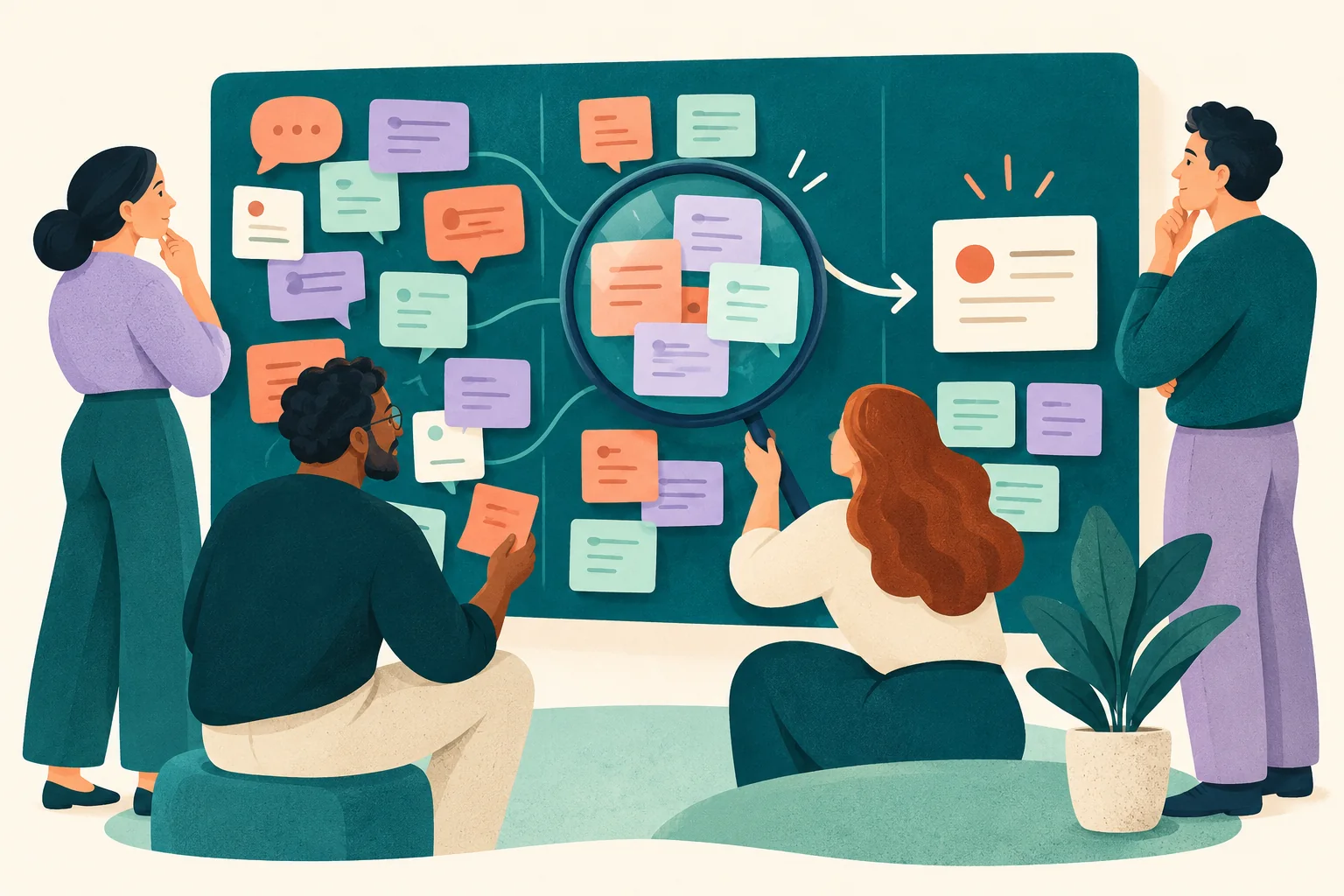
Go deeper than a text box. Add audio and video questions to your forms and surveys, so people can explain an experience in their own words.
Collect spoken feedback, or pair a rating or choice with an audio explanation.
Explore audio questionsCollect video answers for customer stories, introductions, and qualitative research.
Explore video questionsRecording and storage allowances vary by plan. Compare plans →
Start with the outcome
Research works best when you separate what you already know from what you need to learn. A survey can gather comparable answers, while open questions add the context behind them.
Write down the action the research could change: choosing a problem to solve, refining a message, or understanding why people leave.
Define who has the experience you need to study. Document recruitment and avoid treating a convenient group as representative of an entire market.
Use closed questions to compare experiences and open text to investigate the reasons. Keep interpretation connected to the audience and the question asked.
Inside RapidoForm
Inspect the question types, wording controls, and preview tools in the real builder. Use them to turn your research plan into a focused respondent experience.
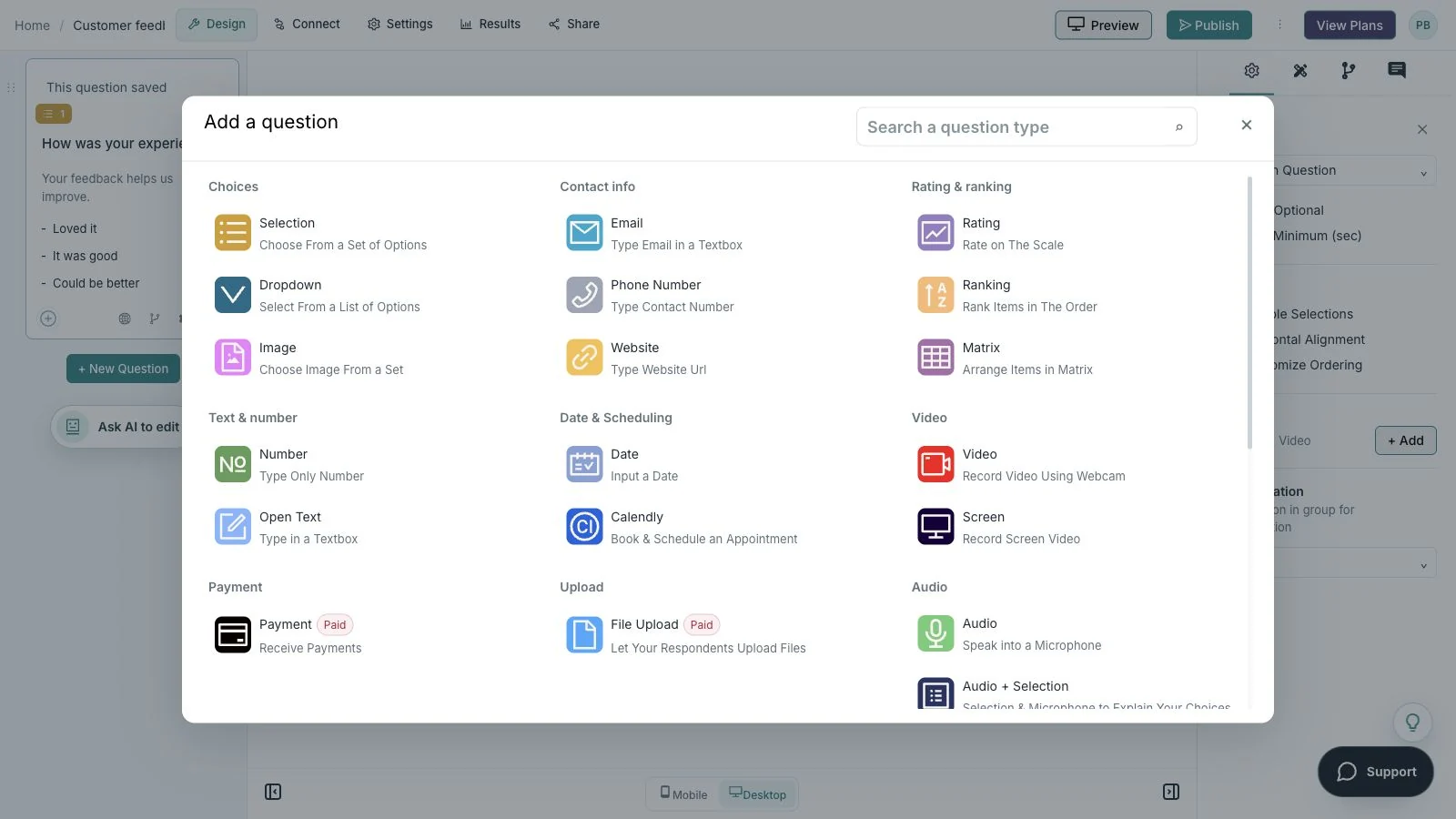
Showing: Choose a question. Screens use sample content. Feature availability varies by plan.
A quick look around
Choose a question, edit the answers, explore themes, and switch to the mobile preview.
A silent guided sequence of real builder screens, using a sample feedback form.
Try the builder for free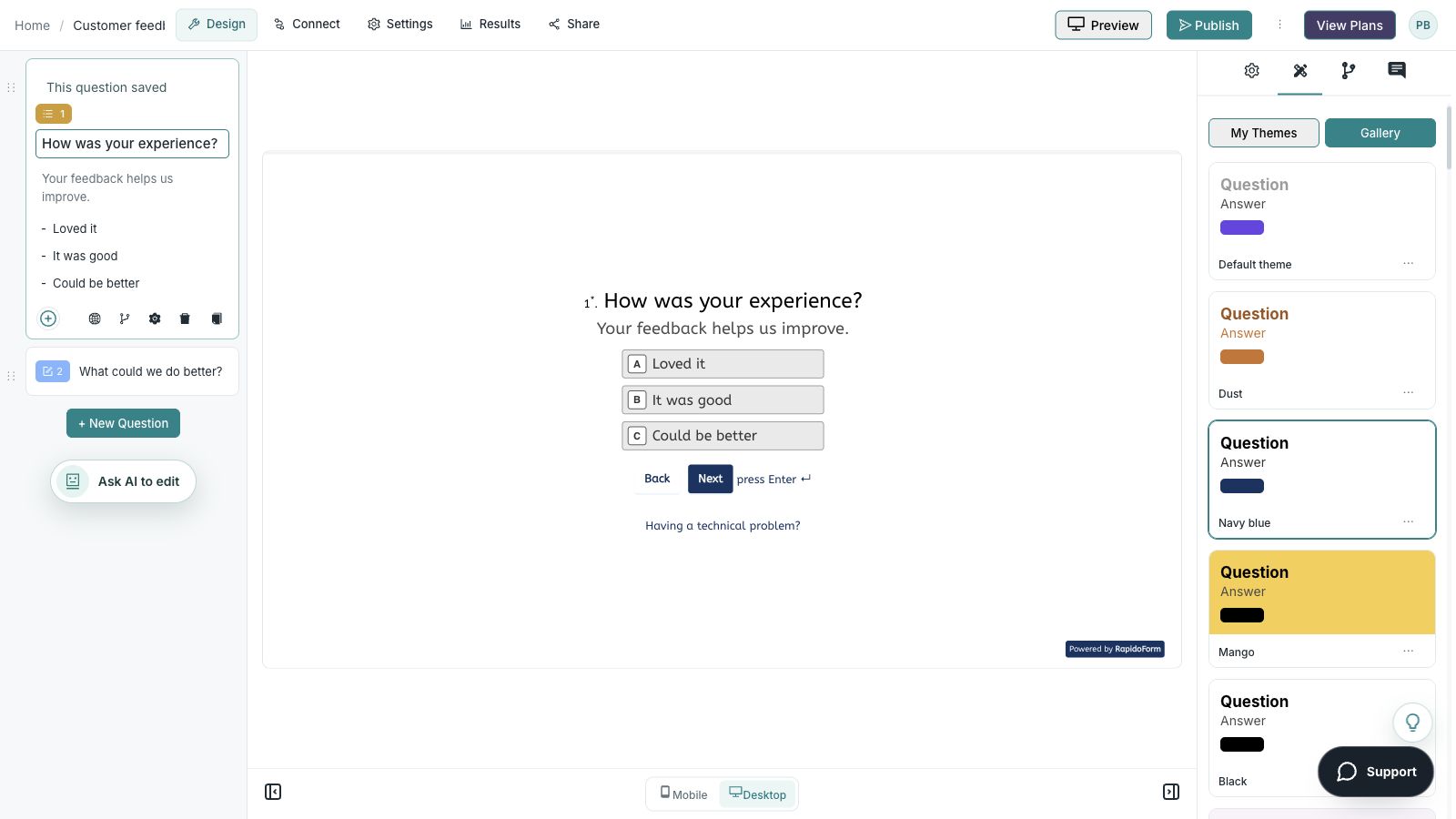
Picture the possibility
A team is considering a new product direction. Instead of beginning with a feature vote, a discovery survey asks what people are trying to do, how they do it today, and where the current approach falls short.
Illustrative example. Answers stay on this page and are not submitted.
Why RapidoForm
RapidoForm helps you organize a research conversation into a clear set of questions. You bring the audience, the research objective, and the interpretation; the builder helps you put the study into a shareable form.
Explore current plans and usageMix choice questions with focused open prompts. Start from a research template or a blank form, then remove anything that does not help investigate the current unknown.
See the builder workflowUse a context question to distinguish people who have completed the task from those who have not. Branch to a useful question for each group.
Explore research branchingPublish the final version and use the respondent link for your recruitment channel. Keep the invitation aligned with who should answer and what experience the study concerns.
Read the sharing guideYour workflow, simplified
Use a small pilot to improve the questions before you invite the full audience. Plan the analysis while you can still change the survey.
Choose one unknown, define relevant participants, and state how the answer will influence a decision. List assumptions you want to test.
Ask about recent experiences, use neutral wording, and offer realistic choices. Pilot with people similar to the target audience and ask what was confusing.
Review missing answers, compare relevant groups carefully, and look for recurring explanations. Report who responded and what the evidence cannot establish.
A choice or rating helps you compare a defined experience across responses. An open question lets people explain circumstances you may not have anticipated. Neither format automatically produces a trustworthy conclusion.
Use the format that matches the decision. When a result surprises you, a follow-up interview or a more focused survey may help explain it.
Explore question formatsSeparate observations from interpretations. “Several respondents mentioned setup difficulty” describes the data; “setup difficulty caused churn” needs additional evidence.
Summarize the audience, recruitment method, timing, and response count with the findings. Assign a next step and identify what evidence you need before making a larger commitment.
Find your starting point
Start with a situation your audience recognizes, then shape the questions around the next step.
Ask about a recent problem and the steps people took to solve it.
Explore how an audience describes a problem before refining your pitch.
Ask about a defined journey and the point where expectations changed.
Make it useful
Focus on recent behavior before asking people to predict an ideal future.
| What to ask | Suggested format | How to use the answer |
|---|---|---|
| Tell us about the last time you tried to solve this problem. | Long text | Ground the research in an actual experience. |
| Which approach did you try first? | Single choice plus other | Understand the alternatives people already use. |
| What made that approach difficult? | Long text | Identify a barrier in context. |
| How often have you faced this problem in the past month? | Non-overlapping frequency ranges | Estimate frequency within a defined period. |
| What did you do when it did not work? | Single choice or long text | Understand workarounds and unmet needs. |
Use these as starting points. Adapt the wording, choices, and required fields to your audience before publishing.
A small change with a purpose
Clear wording helps someone give you the information you actually need. Here are two improvements to try.
“Would you use our new feature?”
“Tell us about the last time you tried to complete this task.”
Recent behavior gives the research a concrete starting point.
“Is price the main problem?”
“What influenced your decision when you chose an alternative?”
An open question allows factors you may not have considered.
Put the idea into practice
Learn why customers use a workaround before choosing what to change.
Example introduction
We are learning how people handle this task today. Please think about a recent example rather than an ideal future process.
Describe the most recent relevant task.
Ground the study in an actual goal.
The current product / Another tool / A manual process / Another approach
Discover the alternatives people already use.
Describe the workaround or the decision to stop.
Understand the consequences of the friction.
Who this is for
People who recently completed the task you are investigating.
How the path works
Ask a follow-up about a workaround only when the person used one. Give people whose original approach worked a separate question about what made it useful.
Example ending
“Thank you for sharing a concrete example. Your answers will help us choose which part of the workflow to investigate further.”
Illustrative setup. Adapt the wording and behavior to your audience.
After the first response
A good research summary helps someone understand both the observation and the decision it can support.
Record who was invited and what relevant experience respondents had. Keep the recruitment context with the findings.
Show the recurring task or workaround first. Explain the inference you are making rather than presenting it as a proven cause.
Use the study to select a follow-up question, interview topic, or product experiment. Identify what you still need to learn.
The details matter
Give the form a complete trial run, including the routes you do not expect most people to take. Check your workspace plan before relying on a feature or response limit.
Compare plan featuresMake the idea yours
You have the idea. Give it a clear structure, make it feel like your brand, and preview the experience before inviting your audience.
Start free. Explore paid features and limits when your workflow needs them.
A recent-task prompt, an alternative or workaround question, and a focused question about difficulty.
A survey is useful for structured responses from an audience. An interview allows probing and clarification. Choose based on the research question; sometimes a few interviews help you design a better survey.
The answer depends on your study design, audience, variability, and the decision at stake. Do not use a universal response target or claim representativeness solely from the number collected.
Use neutral wording, define the relevant audience, avoid overlapping choices, and pilot the survey. Document who was invited and who responded so readers can assess the limits.
RapidoForm offers a free plan alongside paid plans. Check the pricing page for current response limits, AI allowances, integrations, and other feature availability before choosing your setup.
Keep building
Turn an idea into something useful
Start with a template or a blank form, adapt it to your audience, and preview the complete experience before sharing it.
Create a research surveyFree and paid plans available. Features and usage limits vary by plan.